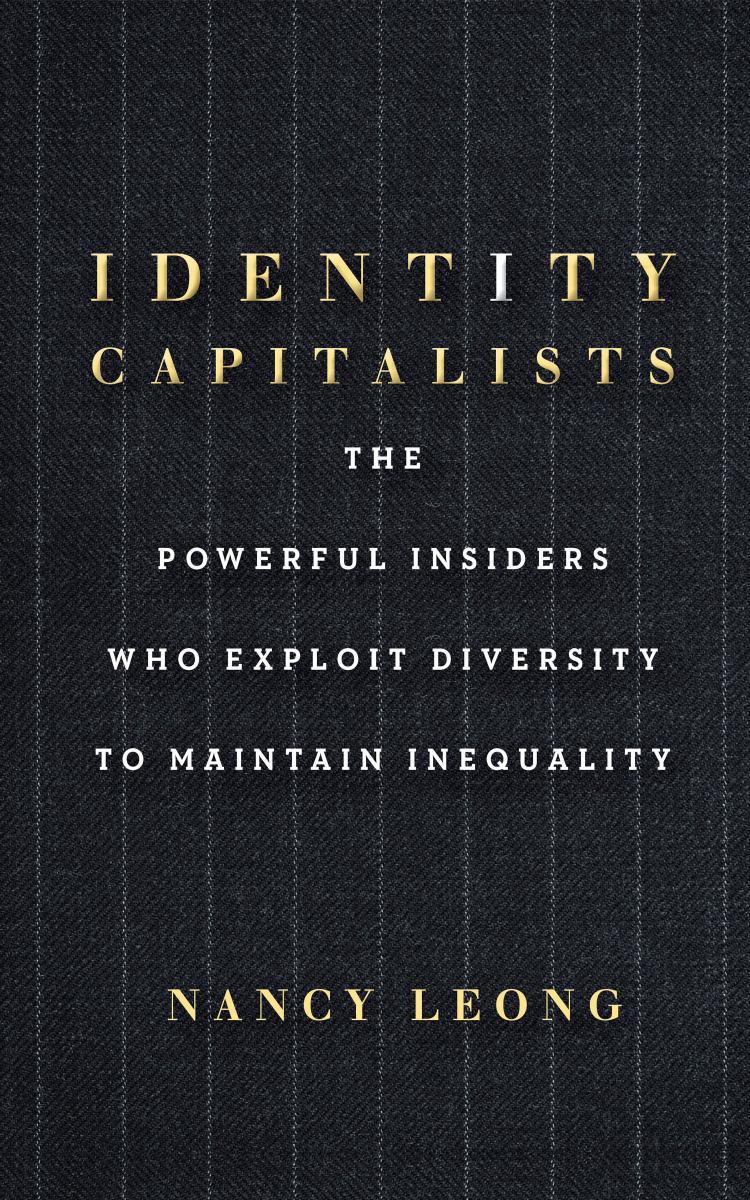
Identity Capitalists by Nancy Leong
Author:Nancy Leong
Language: eng
Format: epub, pdf
Publisher: Stanford University Press
Published: 2020-02-15T00:00:00+00:00
Source: Nancy Leong.
Yet even if a court did acknowledge black womanhood as a distinct target for discrimination, Mary would still be unlikely to win her lawsuit because the law currently ignores variations in identity performance. Because the firm promoted four other black women, the court will likely draw a strong inference that Mary did not suffer discrimination on account of being black, a woman, or a black woman. Mary and the other women are not necessarily in the same position simply because they are all black women. Rather, the law firm may prefer the first four black women to Mary because they perform their identities as black women differently. Many people feel one way about a married black woman who plays tennis at the country club and goes to an Episcopalian church on Sunday and a different way about a black single mom who lives in the inner city and belongs to the Nation of Islam. If Mary is treated worse than the other black women, her poor treatment may still be because of her race and gender. But the reason for Maryâs poor treatment is more nuanced. She is treated poorly because she is the wrong kind of black womanâthe kind the ingroup disfavors.
As the tale of the fifth black woman teaches, the lawâs failure to acknowledge identity performance fosters identity capitalism. Promoting four black women is valuable to the law firm because the firm reaps all the benefits of signaling diversity and trumpeting its excellent record on diversity. Antidiscrimination law also enables the firm to engage in whatever it sees as the most profitable form of identity capitalism. Nothing in the law prevents a law firm from punishing an outgroup member who doesnât perform her identity the way the institution would prefer. If Maryâs law firm likes the way the first four black women perform their identity and dislikes the way Mary performs her identity, no significant obstacle prevents the firm from distinguishing among them. The law ignores that an employer can like some black women while still disliking a black woman, and moreover can do so precisely because she is a black woman who does not conform to their preferences.
This tale of the fifth black woman reveals another way that the law encourages identity capitalism. The first four black women are valuable to an identity capitalist firm because promoting four black women it likes provides cover to deny promotion to a fifth black woman it dislikes. A court will see the promotion of four black woman as strong evidence that the fifth black woman was denied promotion for reasons other than her race and gender. The result is a particularly ugly form of identity capitalism: using favored members of an outgroup to mask discrimination against a disfavored member.
Against the backdrop of unchecked identity capitalism, black women are often forced to choose how to react. The law privileges outgroup members who act like identity entrepreneurs over those who resist ingroup pressure. Carbado and Gulatiâs description also suggests that the four black women who made partner may be identity entrepreneurs.
Download
This site does not store any files on its server. We only index and link to content provided by other sites. Please contact the content providers to delete copyright contents if any and email us, we'll remove relevant links or contents immediately.
| Anthropology | Archaeology |
| Philosophy | Politics & Government |
| Social Sciences | Sociology |
| Women's Studies |
Cecilia; Or, Memoirs of an Heiress — Volume 1 by Fanny Burney(32558)
The Great Music City by Andrea Baker(32019)
Cecilia; Or, Memoirs of an Heiress — Volume 2 by Fanny Burney(31956)
Cecilia; Or, Memoirs of an Heiress — Volume 3 by Fanny Burney(31942)
We're Going to Need More Wine by Gabrielle Union(19046)
All the Missing Girls by Megan Miranda(16027)
Pimp by Iceberg Slim(14507)
For the Love of Europe by Rick Steves(14121)
Bombshells: Glamour Girls of a Lifetime by Sullivan Steve(14075)
Talking to Strangers by Malcolm Gladwell(13370)
Norse Mythology by Gaiman Neil(13365)
Fifty Shades Freed by E L James(13241)
Mindhunter: Inside the FBI's Elite Serial Crime Unit by John E. Douglas & Mark Olshaker(9343)
Crazy Rich Asians by Kevin Kwan(9292)
The Lost Art of Listening by Michael P. Nichols(7506)
Enlightenment Now: The Case for Reason, Science, Humanism, and Progress by Steven Pinker(7313)
The Four Agreements by Don Miguel Ruiz(6765)
Bad Blood by John Carreyrou(6621)
Weapons of Math Destruction by Cathy O'Neil(6280)
